Cardiac disease is an excellent example of sex/ gender health disparities. Cardiac disease is not unique in women - it is the number one killer of men and women in the US. Women fear dying of breast cancer, but die most of heart disease. So, how is it a disparity? Since 1984, more women have died of heart disease as compared to men (even though it occurs in men and usually ten years earlier!)
DIFFERENT EMPHASIS ON RISK FACTORS - The heart story does not focus on different risk factors - rather different importance in risk factors. For example, the ten year - or 'female advantage' in heart disease is lost if a women is a Diabetic. It's lost if she's a smoker. It's also gone when menses stops (surgically or naturally.)
DIFFERENT WAYS IT CAN PRESENT - Heart related diseases can present differently in women. Yes, women can have the 'classic' findings of obstructive heart disease as men - exertional chest pressure that radiates down the arm and is relieved with rest. But they can have other findings that may be viewed as atypical - yet are typical for women: unexplained fast heart beat (tachycardia); nausea; unexplained fatigue; inability to do housework or typical tasks (esp seen in elderly women) and even more alarming, 1 in 4 women may not have any complaints at all! Thus, we need to screen EVERYONE for heart risk (high, medium and low) and evaluate appropriately.
DIFFERENT THRESHOLDS TO PREVENT AND TREAT - Although, heart health awareness are creating change, women still have lower rates of screening for lipids and heart health as compared to their male counterparts. A well known study created vignettes of 'classic' cardiac symptoms and changed the ethnicity (white versus black) and gender. The scripts were exactly the same. Physicians most likely recommended cardiac catheterization to men over women patients. Another 2007 study found that physicians still intervene less with women and heart disease.
SO WHAT SHOULD WE DO? - Collectively and personally, we all need to be more aware of heart health risk factors - for clinicians as well as for patients be they children, men or women. Getting into the risk assessment habit (high, medium, low and optimal) for everyone helps overcome the selective focus of missing half of the population.
A Sampling of Great Web Resources
Our webpage (Women's Health Education Program)
Women’s Health Initiative
DHHS Office of Women’s Health
Food information planning site Mypyramid.gov Want to know how many calories you eat? What's in the food that you love? Check this site out.
Society for Women’s Health Research
The Heart Truth: Resources for health professionals (videos of patients; patient cases and slides)
NHBLI: National Heart Blood Lung Institute (great resources on heart health)
Video on taking a heart health history and the role of gender and ethnicity in heart health risk
– Gender and Ethnic Medicine Cardiac Disease and Women
Reports
– IOM Report Sex Matters 2001 Evidence based report highlighting the difference that sex/gender makes in health.
– Heart Disease and Stroke Statistics-2010 Update, American Heart Association. A ton of great graphs and info here.
– HRSA Women's Databook - each years data book has useful health information on various topics.
Other
-Sentinel article on heart health and women Evidence-based guidelines for cardiovascular disease prevention in women L Mosca, LJ Appel, EJ Benjamin, K Berra, N … - Circulation, 2004
-CDC BMI Online Calculator
This site is a resource for tips and tools for excellence in care for women. It is dedicated to happenings at the Women's Health Education Program of Drexel University College of Medicine. WHEP's programming includes innovative education of health professionals, community outreach, community participatory research and networking with like-minded people interested in overcoming gender health disparities.
Search This Blog
Tuesday, August 17, 2010
Thursday, August 12, 2010
Intimate Partner Violence - More and Deadlier For Women
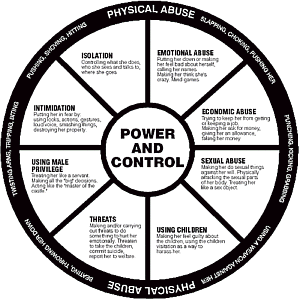
Violence against women is an enormous health issue in the United States. According to an FBI report in 2001, nearly a third of female homicide victims were killed by an intimate partner. Intimate partner violence, or IPV, is violence committed by a spouse, ex-spouse, or current or former boyfriend or girlfriend. IPV includes physical violence, sexual violence, threats of such acts, and emotional abuse. Although both genders are affected, the vast majority of this physical and psychological burden is borne by women.
In 2003, the CDC published a report on the costs of Intimate Partner Violence and estimated that 5.3 million IPV victimizations occured in adult women each year, 2 million of which were injuries and 550, 000 which required medical attention. The costs associated with IPV totalled over $4 billion for medical services and nearly $1 billion in lost work productivity and earnings. The health sequelae are well-established; IPV is linked to low self-esteem, eating disorders, depression, suicidal thoughts, and harmful health behaviors such as smoking, alcohol abuse, drug use, and risky sexual behavior.
So how well do physicians screen their patients for IPV? An ongoing 2010 multi-center Canadian study (Bhandari, et. al) looked at IPV screening attitudes and behavior amongst orthopaedic surgeons. 87% of orthopods believed that less than 1% of female patients in their care were victims of IPV. This was in stark contrast to prior data from fracture clinics that found one-third of women had been victims of IPV within the past year and 2.5% had presenting injuries directly resulting from IPV.
It also turns out that primary care physicians are slightly better at screening for IPV than orthopods, yet still fall far short of expectations. The American Academy of Family Physicians cites on their website a recent study that estimated that 10% of physicians routinely screen for domestic violence during new-patient visits. Where patients presented with physical injuries from abuse, only 79% of physicians asked patients direct questions about domestic violence. 17% of obstetrician-gynecologists routinely screen, compared with 10% of family physicians and 6% of internists.
Resources on Intimate Partner Violence:
National Domestic Violence Hotline 1-800-799-SAFE (7233), 1-800-787-3224 TTY, or
http://www.ndvh.org/
National Coalition Against Domestic Violence http://www.ncadv.org/
National Sexual Violence Resource Center http://www.nsvrc.org/
Family Violence Prevention Fund http://www.endabuse.org/
When Closeness Goes Wrong - Podcast
PRevalence of Abuse and Intimate Partner Violence Surgical Evaluation (P.R.A.I.S.E.): rationale and design of a multi-center cross-sectional study.BMC Musculoskelet Disord. 2010; 11: 77.Published online 2010 April 23.
Blog Submission by Olivia Wang, MS4; WH Pathway, Class of 2011
In 2003, the CDC published a report on the costs of Intimate Partner Violence and estimated that 5.3 million IPV victimizations occured in adult women each year, 2 million of which were injuries and 550, 000 which required medical attention. The costs associated with IPV totalled over $4 billion for medical services and nearly $1 billion in lost work productivity and earnings. The health sequelae are well-established; IPV is linked to low self-esteem, eating disorders, depression, suicidal thoughts, and harmful health behaviors such as smoking, alcohol abuse, drug use, and risky sexual behavior.
So how well do physicians screen their patients for IPV? An ongoing 2010 multi-center Canadian study (Bhandari, et. al) looked at IPV screening attitudes and behavior amongst orthopaedic surgeons. 87% of orthopods believed that less than 1% of female patients in their care were victims of IPV. This was in stark contrast to prior data from fracture clinics that found one-third of women had been victims of IPV within the past year and 2.5% had presenting injuries directly resulting from IPV.
It also turns out that primary care physicians are slightly better at screening for IPV than orthopods, yet still fall far short of expectations. The American Academy of Family Physicians cites on their website a recent study that estimated that 10% of physicians routinely screen for domestic violence during new-patient visits. Where patients presented with physical injuries from abuse, only 79% of physicians asked patients direct questions about domestic violence. 17% of obstetrician-gynecologists routinely screen, compared with 10% of family physicians and 6% of internists.
Resources on Intimate Partner Violence:
National Domestic Violence Hotline 1-800-799-SAFE (7233), 1-800-787-3224 TTY, or
http://www.ndvh.org/
National Coalition Against Domestic Violence http://www.ncadv.org/
National Sexual Violence Resource Center http://www.nsvrc.org/
Family Violence Prevention Fund http://www.endabuse.org/
When Closeness Goes Wrong - Podcast
PRevalence of Abuse and Intimate Partner Violence Surgical Evaluation (P.R.A.I.S.E.): rationale and design of a multi-center cross-sectional study.BMC Musculoskelet Disord. 2010; 11: 77.Published online 2010 April 23.
Blog Submission by Olivia Wang, MS4; WH Pathway, Class of 2011
Tuesday, July 27, 2010
Obesity as a Risk Factor for Early Sexual Debut in Young Adolescent Girls?
The topic of obesity in relation to adolescent girls and sexual activity first arose during a patient encounter of an obese 13-year-old girl, who was asking for birth control pills. The family physician I was following, mentioned that recently, in the past few years, she has noticed that her overweight and obese adolescent female patients are having sex much more than her normal weight patients. She prompted me to read an interesting article on the topic on Medscape Medical News, which is summarized below:“In a recent study presented at the 58th Annual Clinical Meeting of the American Congress of Obstetricians and Gynecologists by Villers, et al, showed that overweight and obese adolescent girls are more likely to engage in risky sexual behavior than their normal-weight peers. The researchers evaluated data from the CDC’s Youth and Behavior Survey from 2003-2007 of 21,773 girls in grades 9-12. The BMI was calculated using self-reported height and weight. The study analyzed 6 different risky sexual behaviors such as whether or not the teens had sexual intercourse age at first sexual intercourse, number of sexual partners, condom use, and alcohol/drug use during their last sexual intercourse. The results revealed that obese and overweight girls were more likely to have an earlier age of sexual debut, more sex partners, and were less likely to use condoms than their normal weight counterparts.”
During the women health discussion of the topic at DUCOM, it was noted that the study did not account for history of abuse, socioeconomic factors, and other factors such as self-esteem and depression. Another interesting point is that obese and overweight girls reach puberty earlier than their normal weight counterparts. More research needs to be done on why overweight and obese adolescent girls are more likely to engage in sexually risky behaviors than those are normal weight. Childhood and adolescent obesity is a risk factor for many things from health related ailments to psychosocial limitations, and this recent survey adds to the list of the harmful effects of obesity.
-- Mimi Mak MS IV, adapted from Obesity a Factor in High-Risk Sexual Behavior in Adolescent Girls
Medscape Medical News , 2010-05-28
Additional Resources Role and Consequences of childhood obesity
Thursday, July 15, 2010
Healthy nutrition - need to ask about access
When you ask about nutrition - you need to ask about access to food.
During your third year as a medical student, caring for people in the Philadelphia area, you quickly realize that obesity, hypertension and diabetes are the norm. Diet has a big impact on these health problems.
As clinicians we instruct our patients to eat a healthy diet and maintain a healthy weight. When we advise patients in this way we assume that they have access to healthy food. The fact is that many Philadelphians do not have access to fresh healthy food.
In fact the recently proposed Food Desert Oasis Act of 2009 named Philadelphia as one of 20 “Food Deserts” in the US. This means that many of the people who we care for do not have access to fresh food, they many not live within a walkable mile of a grocery store, and may not have transportation to grocery stores in other neighborhoods. This problem disproportionally affects lower income and minority neighborhoods.
So ask!
Before you advise someone to eat more fruits and vegetables ask,
Blog submission Alethia Donahue MS4 WH Pathway class of 2011
Photo credits: Homegrown tomatoes Alethia Donahue 2009; Saharan Beetle Juice A. Núñez 2009
During your third year as a medical student, caring for people in the Philadelphia area, you quickly realize that obesity, hypertension and diabetes are the norm. Diet has a big impact on these health problems.
As clinicians we instruct our patients to eat a healthy diet and maintain a healthy weight. When we advise patients in this way we assume that they have access to healthy food. The fact is that many Philadelphians do not have access to fresh healthy food.
In fact the recently proposed Food Desert Oasis Act of 2009 named Philadelphia as one of 20 “Food Deserts” in the US. This means that many of the people who we care for do not have access to fresh food, they many not live within a walkable mile of a grocery store, and may not have transportation to grocery stores in other neighborhoods. This problem disproportionally affects lower income and minority neighborhoods.
So ask!
Before you advise someone to eat more fruits and vegetables ask,
- Where do you get your food?
- Do they sell fresh food where you shop?
- Is it quality and affordable fresh food?
- Do you have affordable transportation to a grocery store?
Blog submission Alethia Donahue MS4 WH Pathway class of 2011
Photo credits: Homegrown tomatoes Alethia Donahue 2009; Saharan Beetle Juice A. Núñez 2009
Friday, July 2, 2010
Women's Health Ambulatory Experience
Many moons ago when we developed the Ambulatory rotation, we wanted to give seniors an opportunity: for 1:1 face time with mentors and role models; to learn practical issues on sex/gender health disparities and women’s health; to reflect on an (self-defined) interesting topic and become expert on it and; to see how health and illness fit together in the context of where patients live – in their communities. Toward that end the clinical piece, community piece and scholarly pieces were birthed.
Primary and specialty clinical care affords a basis for skills development and reinforcing issues about health promotion and disease prevention. The community piece is rarely (if ever seen) in training – it is the taken-for-granted-wallpaper, yet the context of care, the strengths that arise from families and communities are essential for optimal heath outcomes. Lastly, there is the scholarly piece. We wanted an opportunity for students to work on an issue that they care about or create something that they could be proud of (that was needed and useful!) Originally, it was a paper – a time to reflect on an issue or topic and demonstrate your thoughtfulness and analysis – not a book report or regurgitated list of facts. In time, students asked for an opportunity to ‘make’ something – a bulletin board; a presentation with a powerpoint; a brochure; a training experience on a topic – and now a women’s health education blog opportunity.
During your senior year, we value you as role models for years 1-3 and hope that (beyond Ambulatory requirements) that you will come to events and seminar series when you are in town.
Here’s some tips on getting the most out of your experiences
1. Think about what the clinician can teach you that you ‘need to know’; that would be useful
2. Generate objectives to see if it makes sense (to you and them)
3. Do a midpoint check in with Dr. Kahng or me
4. Think now about your paper or project (you can do it in advance!)
5. Consider what is culturally appropriate behavior in community outreach – what does it mean? What does it look like?
6. Decide what you want more information about (and ask about resources) so that you can get questions answered.
This experience is supposed to be organic - you need to let us know as we go, so we can continue to improve it.
Primary and specialty clinical care affords a basis for skills development and reinforcing issues about health promotion and disease prevention. The community piece is rarely (if ever seen) in training – it is the taken-for-granted-wallpaper, yet the context of care, the strengths that arise from families and communities are essential for optimal heath outcomes. Lastly, there is the scholarly piece. We wanted an opportunity for students to work on an issue that they care about or create something that they could be proud of (that was needed and useful!) Originally, it was a paper – a time to reflect on an issue or topic and demonstrate your thoughtfulness and analysis – not a book report or regurgitated list of facts. In time, students asked for an opportunity to ‘make’ something – a bulletin board; a presentation with a powerpoint; a brochure; a training experience on a topic – and now a women’s health education blog opportunity.
During your senior year, we value you as role models for years 1-3 and hope that (beyond Ambulatory requirements) that you will come to events and seminar series when you are in town.
Here’s some tips on getting the most out of your experiences
1. Think about what the clinician can teach you that you ‘need to know’; that would be useful
2. Generate objectives to see if it makes sense (to you and them)
3. Do a midpoint check in with Dr. Kahng or me
4. Think now about your paper or project (you can do it in advance!)
5. Consider what is culturally appropriate behavior in community outreach – what does it mean? What does it look like?
6. Decide what you want more information about (and ask about resources) so that you can get questions answered.
This experience is supposed to be organic - you need to let us know as we go, so we can continue to improve it.
Women's Health Pathway versus Women's Health Scholars and the Seminar Series
Happy Summer - such that it is, being in medical training! Let me clarify two different experiences house here at the Women's Health Education Program - the Pathway and the Scholars experience. The Pathway is open to rising third years/seniors and is an opportunity to spend focused time with us; do student-driven projects and become expert at sex and gender health issues within their specialties (and get aid/advice/support while getting wonderful residencies.) Pathway alumni include more than 70 women and men physicians - in fields such as Internal Medicine; Family Medicine; Ob/Gyn; Peds; Med/Peds; Neurology; Surgery (including Ortho and Urology); Radiology; Anesthesia; and Psychiatry. Our only requirement is the Ambulatory rotation (more on that later) We have eight awesome pathway students and anticipate a terrific year! Our first group meeting is July 20th. After we finish, let me know if you'd like to hang out - my house or elsewhere. I'm not posting any Pathwayer pictures (yet) since all we have are you entering mug shots - so we'll get better ones on the 20th!
The Women's Health Scholars is an opportunity for all students. The eligibility to become a Scholars is 1)attendance at the majority of the Seminar Series (WHSS) sessions in year 1 and 2; 2) a community involvement activity and 3) a vetted scholarly project that must be completed (optimally in the third year) but no later than early fourth year - so that your Scholars designation can appear in the graduation program. Detailed requirements are here.
The Seminar series commences Sept 14th - but this year, we have a preview of 'Cool Stuff We Did At WHEP' from our summer and research students. Stay tuned for the date!
The Women's Health Scholars is an opportunity for all students. The eligibility to become a Scholars is 1)attendance at the majority of the Seminar Series (WHSS) sessions in year 1 and 2; 2) a community involvement activity and 3) a vetted scholarly project that must be completed (optimally in the third year) but no later than early fourth year - so that your Scholars designation can appear in the graduation program. Detailed requirements are here.
The Seminar series commences Sept 14th - but this year, we have a preview of 'Cool Stuff We Did At WHEP' from our summer and research students. Stay tuned for the date!
Tuesday, April 13, 2010
A Choice Environment
There is a new book out about how we make choices, The Art of Choosing by Sheena Iyengar. In her Voices of the Family interview, she discusses sex/gender differences and states "women have different choice environments than men" in that they have more social implications put upon them (and accepted by them) for their choices ("This blouse or that one?") and usually consider more variables when arriving at a decision. "I want" is answering the question easy or hard? Granted I want is a little different than I pick this or that. Here's sticky chart entitled "I want" from Dave Gray at Communication Nation - in his blog he has an interesting listing of 'wants' from a trainings he does.
In medicine, we ask people to make choices every day (and usually pretty quickly.) How can we best help others priorities and how can we motivate them to make their health a priority?Apparently, in Iyengar's book (haven't read it yet) she recommends focusing upon priorities and eliminating the extraneous. Easier said than done, I think! What are the implications of decisionmaking and anxiety?
BTW - Number of women with disability poll answer is 1 in 5!!
In medicine, we ask people to make choices every day (and usually pretty quickly.) How can we best help others priorities and how can we motivate them to make their health a priority?Apparently, in Iyengar's book (haven't read it yet) she recommends focusing upon priorities and eliminating the extraneous. Easier said than done, I think! What are the implications of decisionmaking and anxiety?
BTW - Number of women with disability poll answer is 1 in 5!!
Subscribe to:
Posts (Atom)